Courses by tool
Pick a tool — Academy courses with programs, hands-on practice and student reviews inside.
Popular courses
By ratings and enrollment





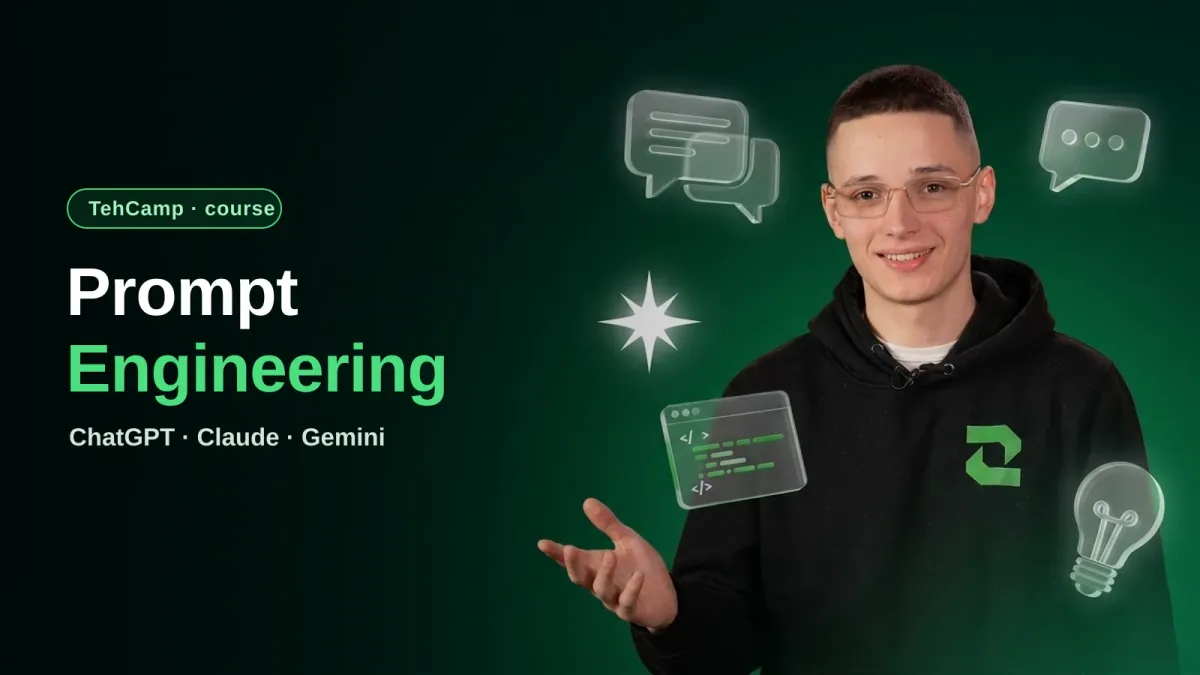
New courses
Fresh Academy programs
From the blog
All posts →
FAQ
How do I pick a course by tool?
Start from the tool that solves your job: text and automation — ChatGPT and Claude, images — Midjourney, no-code websites — no-code platforms. Each tool page lists courses of different levels with programs and reviews.
Are there free courses?
Yes — for example the free Zerocoder platform course: five short lessons from your first generation to a published website. A great entry point before paid programs.
What does a paid course add over free videos?
Structure and feedback: a step-by-step program built on real projects, assignment reviews, curator support and a certificate. Faster than piecing knowledge together from scattered videos.
Are the courses beginner-friendly?
Yes, most programs start from zero — you only need a browser. The level is stated on each course page.
How does the learning work?
Online, at your own pace: video lessons, hands-on assignments and a support chat. Access to materials never expires.
Courses by tool: learn the right AI stack for the job
The Academy’s courses by tool hub helps you choose training based on the tool you actually plan to use. If you want to write with ChatGPT, create visual concepts with Midjourney, build with Claude, or work inside no-code platforms, you do not need a vague “AI basics” track. You need a course that matches the tool, the workflow, and the output you want to ship.
That is why this hub groups courses by platform and use case. It is designed for people who want practical results: better prompts, stronger outputs, fewer dead ends, and a faster path from theory to something usable. If you are still comparing options, you can also browse all courses and then return here to pick the most relevant tool-based track.
The main tool groups are straightforward:
- ChatGPT for writing, ideation, research, support, and general-purpose workflows.
- Claude for long-form thinking, structured analysis, document work, and careful drafting.
- Midjourney for image generation, visual direction, style exploration, and creative production.
- No-code platforms for building websites, automations, and practical products without traditional coding.
Choose a course by goal, not just by tool
The fastest way to pick the right course is to start with the outcome you want. Different tools can solve different parts of the same problem, but your goal should decide the starting point. If you want to generate text, improve copywriting, or speed up research, a ChatGPT or Claude course is usually the right fit. If you want images, product mockups, or visual branding ideas, Midjourney is the more direct choice. If you want to launch a site, connect services, or automate repetitive work, a no-code platform course is more useful than a general AI overview.
Use the course catalog like this:
- Text: prompts, outlines, content systems, summarization, email, articles, and editing workflows.
- Images: style control, visual consistency, prompt structure, and iteration for AI art.
- Websites: landing pages, site structure, design workflows, and no-code publishing.
- Automation: triggers, data transfer, repeatable workflows, and app-to-app connections.
- Earning: freelance services, productized offers, portfolio pieces, and client-ready delivery.
This goal-first approach saves time. Instead of learning features you will not use, you focus on the exact skills that support the next step in your work. A writer does not need the same path as a designer. A founder building a lead-gen page does not need the same course as someone packaging AI services for clients.
Why structured courses beat scattered videos
Random tutorials are useful for quick answers, but they rarely produce dependable skill. A structured course gives you a sequence: concept, example, exercise, review, and correction. That matters because AI tools are easy to use badly. You can get output fast, but fast output is not the same as useful output. Without structure, most learners repeat the same mistakes: weak prompts, unclear briefs, inconsistent formatting, and a shallow understanding of why a result worked.
A good course also reduces wasted effort. It keeps the scope narrow, teaches one workflow at a time, and shows how to improve results through iteration. That is especially important for tools like ChatGPT, Claude, Midjourney, and no-code platforms, where the difference between average and effective work often comes down to setup and process rather than raw tool knowledge.
Assignment review is the part that makes the difference. When a mentor or reviewer looks at your work, you get feedback on specifics: what to change, what to simplify, what to automate, and where the output is still too vague. That feedback loop is hard to replace with videos alone. It turns passive watching into actual skill-building and helps you avoid the trap of “I understand it when I see it” without being able to do it yourself.
Start with the free Zerocoder platform course
If you want a low-risk starting point, begin with the free course. It is a practical entry point for people who want to understand how the Zerocoder learning platform works before choosing a more specialized track. That makes it a sensible first step if you are new to the Academy, if you want to compare formats, or if you are not yet sure whether your priority is text, images, websites, automation, or monetization.
From there, move into the course that matches your current goal. If your immediate need is writing or research, choose a tool-based text workflow. If your goal is visuals, go directly to Midjourney. If your goal is to publish or automate, start with a no-code platform course. The value of the hub is that it keeps the path clear: learn the tool, practice the workflow, get feedback, and apply the result to a real task.
For most learners, the best sequence is simple: start free, choose one tool, finish one structured course, then expand to the next tool only when the first workflow is already useful. That is the shortest route from curiosity to results.