Keyword density checker free
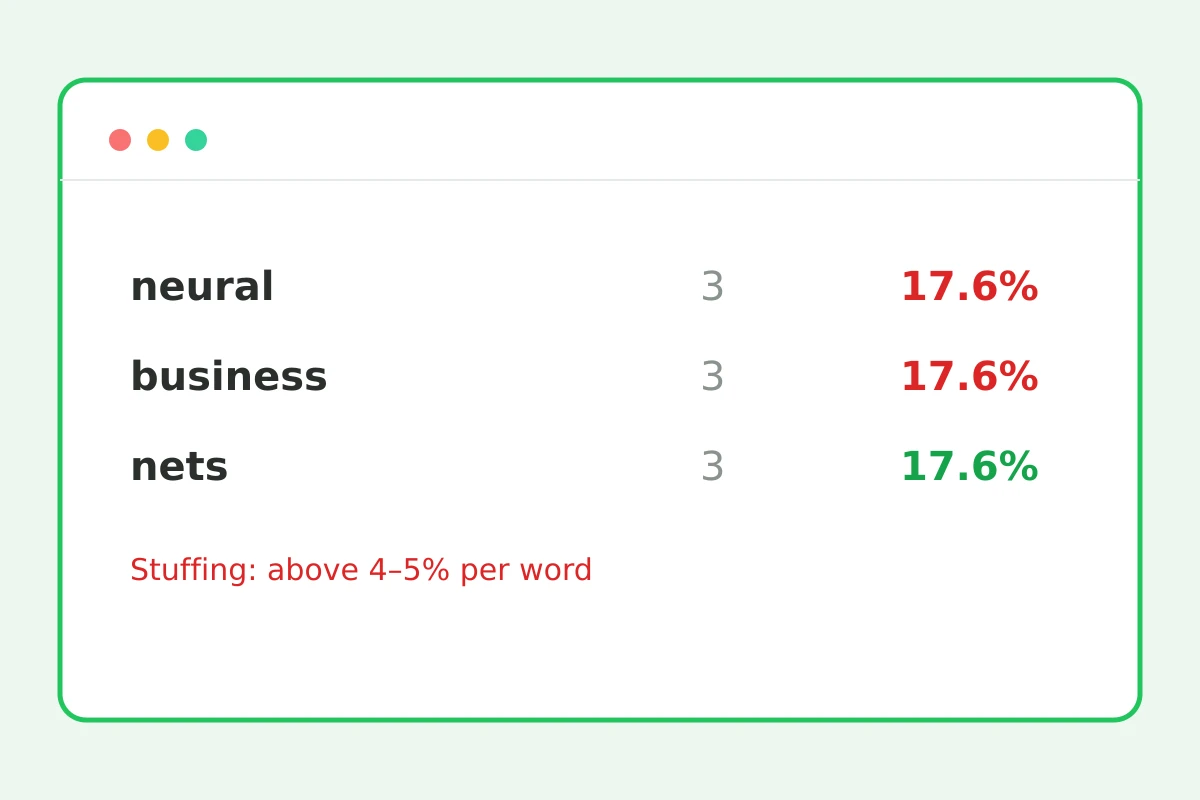
The top-15 meaningful words with counts and percentages — keyword stuffing shows at a glance.
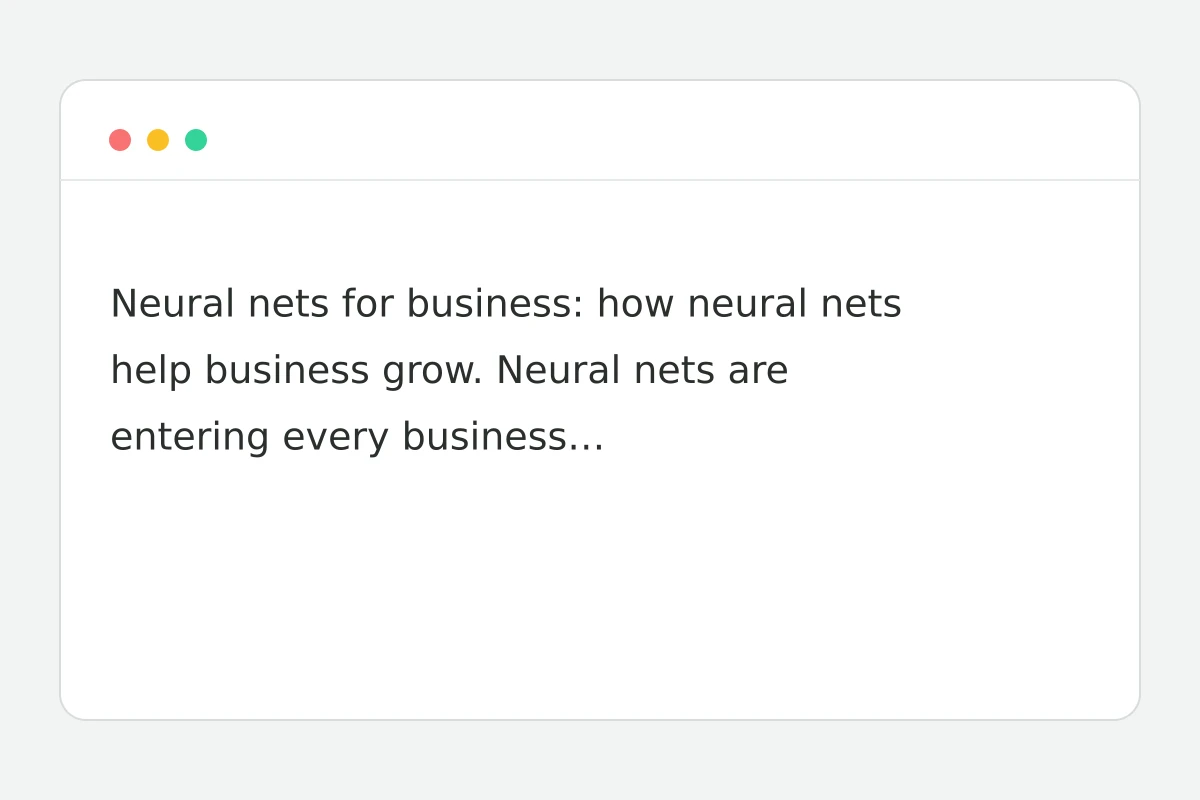
Stuffing shows immediately
How to check density in 4 steps
A draft, a published page, a competitor's.
Stop words are filtered automatically.
Count and share for each.
Aim for 1–3% on the main keyword.
Part of the Zerocoder platform
One tool of a platform where AI generates websites, images, video, text and documents — under one subscription.
Keyword density is the quick indicator of two ills: stuffing, which search engines demote, and the opposite — when the main keyword barely appears. The analyzer filters prepositions and conjunctions and surfaces the top-15 meaningful words with counts and shares. Everything runs in the browser — the text never leaves the page, so unpublished drafts are safe. Volume and reading time come from the character counter; make the page slug with the slug generator. Texts that never need rescuing from stuffing are written by the Zerocoder Studio.
What density counts as normal
The working guideline is 1–3% for the main keyword: with 500 meaningful words that's 5–15 uses. Above 4–5% the text reads as spam to humans and algorithms alike. But density is an indicator, not a goal: modern engines grade meaning and topical completeness, not repeat counts. Cover the query fully and the density settles itself.
Removing stuffing without killing the text
Swap some repeats for pronouns and synonyms, rebuild sentences that carry the keyword twice, and drop it from most subheadings — two or three are enough. The best check: read the text aloud. Any phrase you wouldn't say to a real person (“buy website cheap price best”) is a rewrite candidate.
Competitor analysis by density
Paste a top-ranking page's text — you'll see which words carry its topic and in what proportion. That's a semantics hint: words in a competitor's top-15 that are missing from yours are candidates to add. Don't copy proportions; close the topics the competitor covered and you didn't.
Reviews
No reviews yet — be the first.
More in Free tools
View category →







From the blog
All posts →


FAQ
What density is normal?
Aim for 1–3% on the main keyword — enough for search engines to read the topic clearly. Above 4–5% the text risks being treated as keyword stuffing and losing positions.
What are stop words?
Prepositions, conjunctions and pronouns — functional noise that carries no meaning. The checker excludes them from the count so only meaningful words make the top-15 table.
Are word forms merged?
No, exact forms are counted separately: “site” and “sites” are different rows. Several related forms in the top-15 are a signal too — the keyword's combined density is higher than one row shows.
How much text can I paste?
Tens of thousands of words — the analysis runs instantly in your browser. Check a long-read, a service page or a full blog article in a single pass.
Is my text uploaded?
No, the whole keyword density check runs in the browser — nothing is sent to a server. Drafts and unpublished articles stay safe on your side.
Is density a ranking factor?
Not a direct one — it hasn't been for years. But stuffing is penalised and topical completeness is rewarded, and a density check helps you spot both before publishing.
Do I need an account?
No, the keyword density checker is free and unlimited: analyse as many texts as you like without signing up. Paste the text and get the top-15 table instantly.
What do I do with the result?
Keep the main keyword at 1–3%, cover the top-15 topics competitors rank for that you're missing, and rewrite the filler that surfaces in the table. Then re-run the check.
What else does Zerocoder do?
Zerocoder's AI writes articles that self-check for keyword stuffing, and the platform offers courses and jobs. The density checker is one of its free browser utilities.